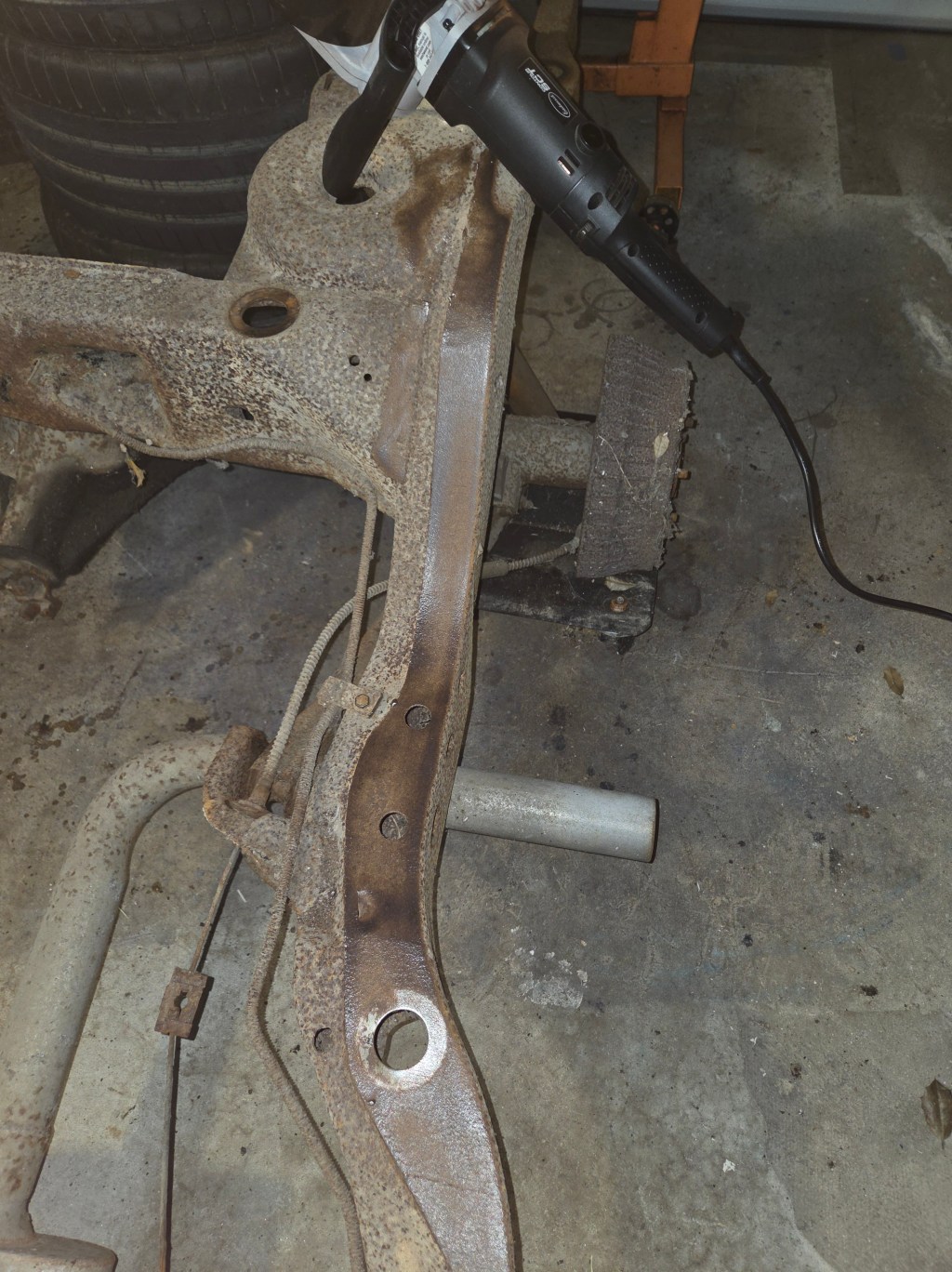
Frame teardown officially started this week, and the frame wasted no time telling on a previous owner.
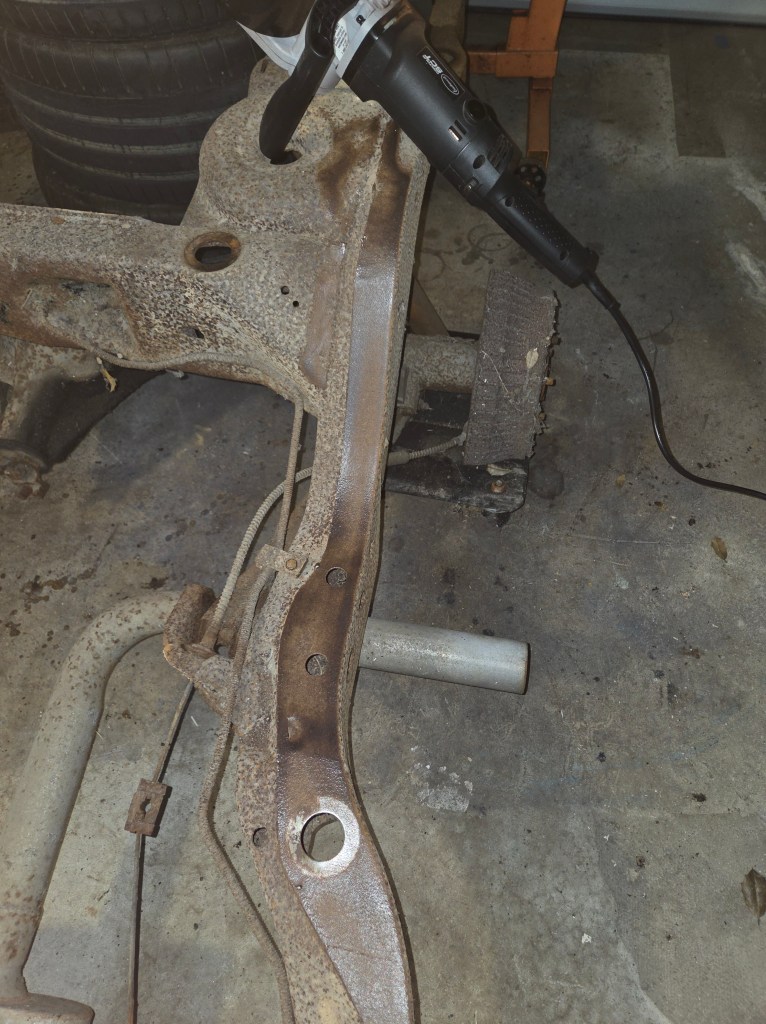
First order of business was getting acquainted with the rails. The Eastwood SCT came out and started peeling fifty-seven years of grime and surface rust off the frame, and you can see the results in that stripe of clean steel; that is what has been hiding under there the whole time. Solid, honest metal. The SCT is going to earn its keep on this project.
But while I was working my way along the rail, the frame told on somebody.
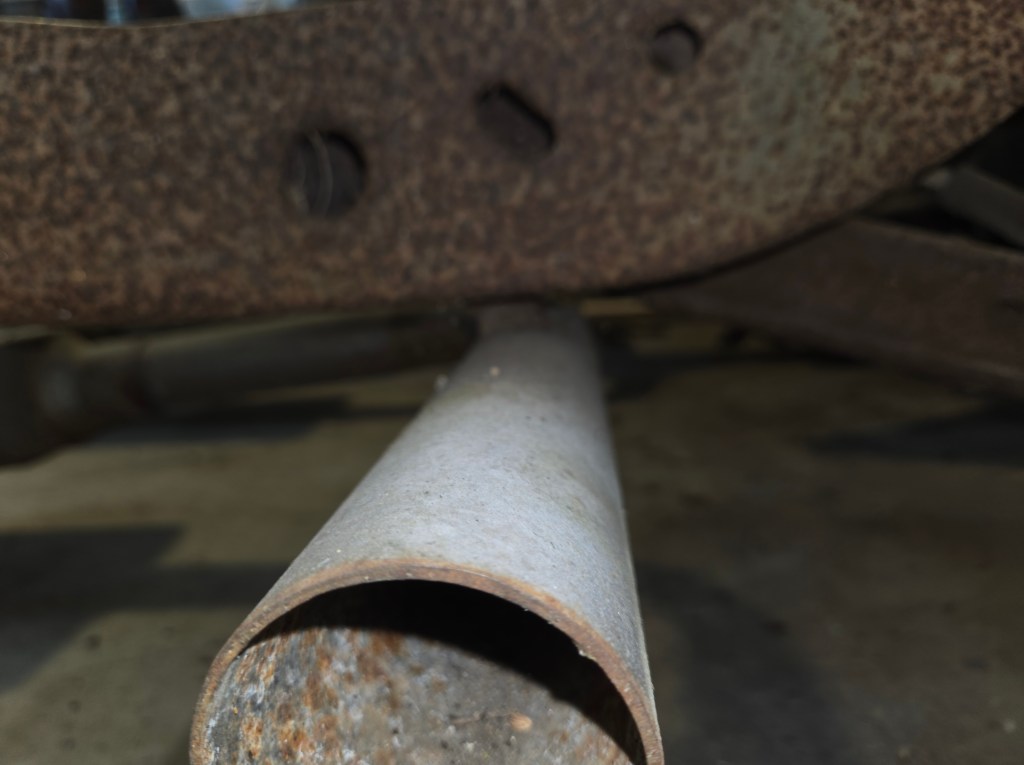
That old exhaust was supposed to be long gone by now. It is still hanging there, and here is why: look close at where that pipe meets the rail. Somewhere in this car’s past, somebody welded the exhaust directly to the frame. Not a hanger bracket. Not a clamp. The pipe itself, burned straight onto the rail.
Who does this?
The mystery it solved
Here is the thing. That weld actually answered a question I had been carrying since the engine came out. The header bolts on this car were finger tight. All of them. At the time I chalked it up to a sloppy last tune up and moved on.
Nope. It was the system working exactly as somebody designed it, God help them.
An exhaust hangs on rubber for a reason. The engine sits on rubber mounts and rocks every time you get on the throttle. The body sits on rubber mounts. The exhaust bolts to the engine at one end and follows the frame at the other, so the whole system has to float. The rubber hangers let it move with the drivetrain instead of fighting it.
Weld the pipe solid to the frame and all that movement still has to go somewhere. Every throttle stab, every heat cycle, every pothole gets fed straight into the one joint left with any give: the header flange. Torque those bolts down properly and they either shake loose or crack the flange. So the flange stayed loose. Maybe on purpose, maybe the bolts just kept backing out until somebody quit retightening them. Either way, the welded pipe held the weight while the header connection did the flexing.
The exhaust was hanging the exhaust. The header bolts were the hinge. Completely backwards, and somehow it drove around like that – for how long?
The fix
The reciprocating saw settles this. The system comes out in pieces, and the weld stubs left on the rail get ground flush and dressed smooth. When this frame goes to blast we will get an honest look at what the welding did underneath. Steel that has been through a welding heat cycle rusts faster than the parent metal around it, so those spots go on the inspection list along with the boxed sections. If the rail needs a repair there, it gets one before powder. My bet is it cleans up fine, but bets do not get powder coated. Inspections do.
None of the old system was ever going back on anyway. The new exhaust gets hung the way Oldsmobile intended and the aftermarket perfected: proper welded hangers with fresh rubber isolators, full float, headers torqued to spec and staying there.
What’s next
The frame keeps shedding. Brake and fuel lines get photographed for routing reference, then stripped. The 12 bolt comes out. Front suspension after that. Every session gets the rails a little closer to bare, and bare rails mean blast day is getting real.
Every old car has at least one “who does this?” moment buried in it somewhere. This one was welded on.
Anchorpoint Iron
 Anchor Point Iron - Classic Car Restorations and Customizations
Leave a comment