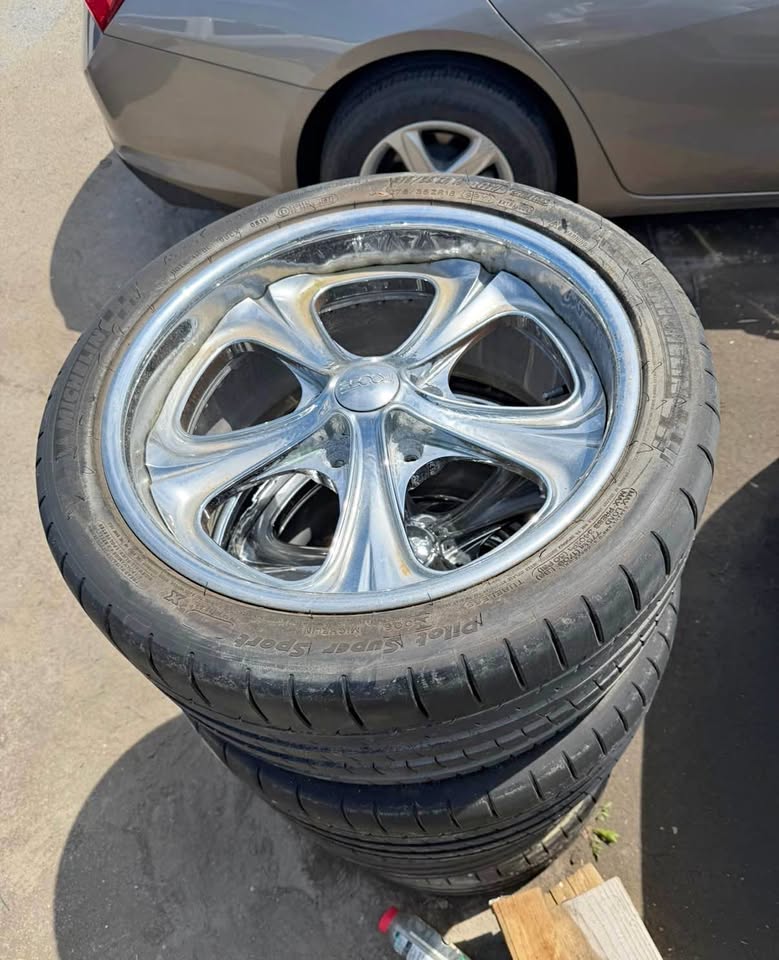
The Cutlass has her shoes. A set of Foose F228s, 18×9, correct GM bolt pattern, sitting in the shop waiting their turn. They are not new. I do not care. Foose never goes out of style, and I am going to spend a minute explaining why that name on a center cap means something.
Who is Chip Foose
If you did not grow up watching this stuff, here is the short course. Chip Foose grew up in his father’s custom shop, sweeping floors and shaping metal before most kids can drive. He went through ArtCenter College of Design, then became the chief designer at Boyd Coddington’s shop during the years when Boyd’s cars were redefining what a hot rod could be. In 1997 he became the youngest person ever inducted into the Hot Rod Hall of Fame. He was 31.
Then he went out on his own, and the trophies started stacking up. Cars from Foose Design have won the Ridler Award, the most prestigious prize in custom car building, four times. He has won America’s Most Beautiful Roadster seven times. Most people know him from Overhaulin’, the show where he and a crew rebuilt somebody’s beloved car in a week while the owner thought it had been stolen. And in 2000 he put his name on a wheel line, which is how a piece of his design language ends up in garages like mine.
Plenty of people have signed their name to a wheel. The difference is that Foose actually draws them, and it shows. His stuff comes from the same hand that drew Ridler winners.
Why these wheels
The F228 is a five spoke, and the five spoke is the muscle car wheel. It is the shape every American performance car has worn in one form or another since the sixties. What Foose did with it is what he does with everything: kept the classic proportions and cleaned up every line, so the wheel looks correct on a 1969 body while everything about it says it was designed decades later. That is exactly the sentence this whole build is trying to say.
These particular wheels have another thing going for them: they are three piece construction. Center, barrel, and lip, bolted together as separate parts, the way high end wheels are built. You can see the assembly hardware ringing the wheel, and that detail alone gives the wheel depth a one piece casting never has. It also means the wheel comes apart, which matters for what happens next.
The plan
The chrome on these has lived a life, and chrome that has started to go does not come back. So these wheels are coming completely apart, every bolt photographed and labeled, and getting refinished in house.
The centers go gunmetal, powder coated in the shop oven, a medium gunmetal with some metallic in it so the finish has life. The outer lips go gloss black. I will be honest about where that second decision came from: my wife saw a set of multi piece wheels with black outers and that was that. She was right, too. Gunmetal centers against black lips keeps the two tone visible, keeps the three piece hardware on display, and under Viper Blue paint with silver stripes it puts the wheels in a modern lane while the chrome bumpers and grille handle the classic brightwork.
New seals go in at reassembly, every bolt gets torqued in a star pattern to spec, and every wheel gets leak tested before a tire ever touches it. Three piece wheels earn their look, and they collect their dues in assembly discipline.
The point
There will be people who say these are an older wheel design. Correct. So is the car. A 1969 Cutlass does not need the newest thing bolted to it. It needs the right thing, drawn by somebody who understands these cars in his bones. That is what a Foose five spoke is, and refinished in this shop’s colors, this set will look like it was designed for this exact car.
Because after the powder oven gets done with them, it basically was.
Have a favorite wheel that never goes out of style? Rallys, Cragars, slot mags, Torq Thrusts, make your case in the comments.
Let’s build it.
Anchorpoint Iron
 Anchor Point Iron - Classic Car Restorations and Customizations
Leave a comment