Two sessions since the last post, and the Cutlass gave up more in those two days than it has in months. Here is the recap.
First, the eviction
Fifty seven years outside means a car stops being a car and starts being a habitat. Leaves, sticks, seed pods, bedding from tenants I never met and do not want to. All of it came out. I am calling the process de naturing, and if that is not a real word, it is now.
This matters for more than housekeeping. Debris hides metal. You cannot read a floor pan through a compost layer, and the whole point of this phase is documentation: photographing every rust area while the original condition is still visible. Once the shell gets blasted to bare metal, the evidence is gone forever. So the camera followed the shop vac around all morning.
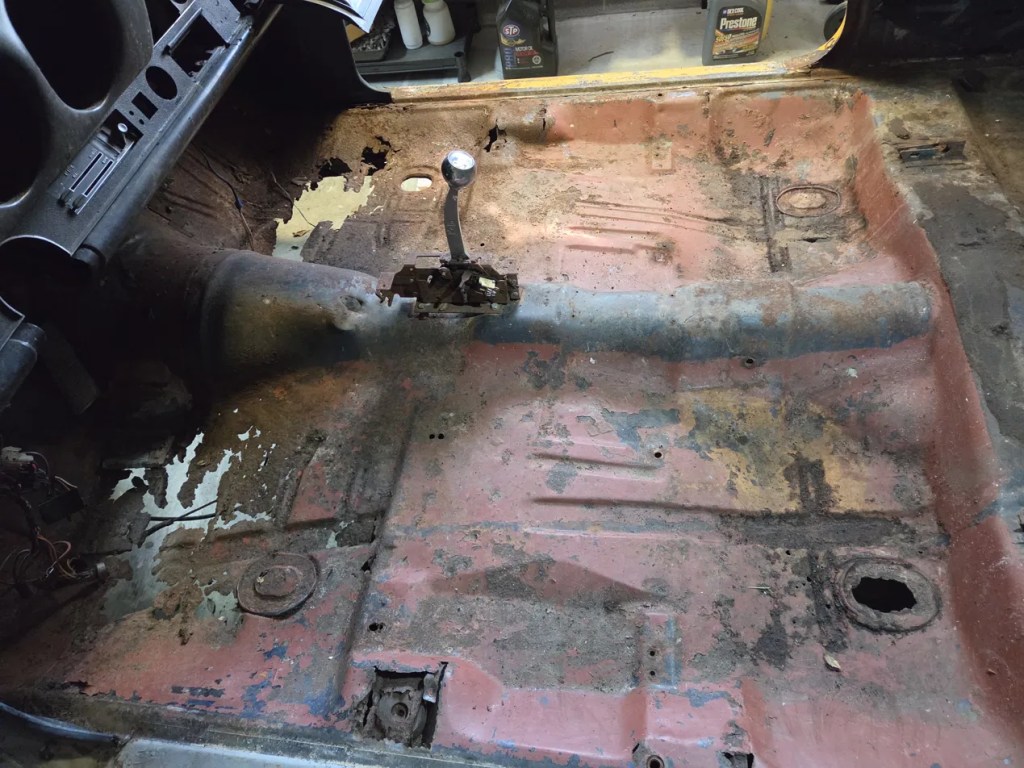
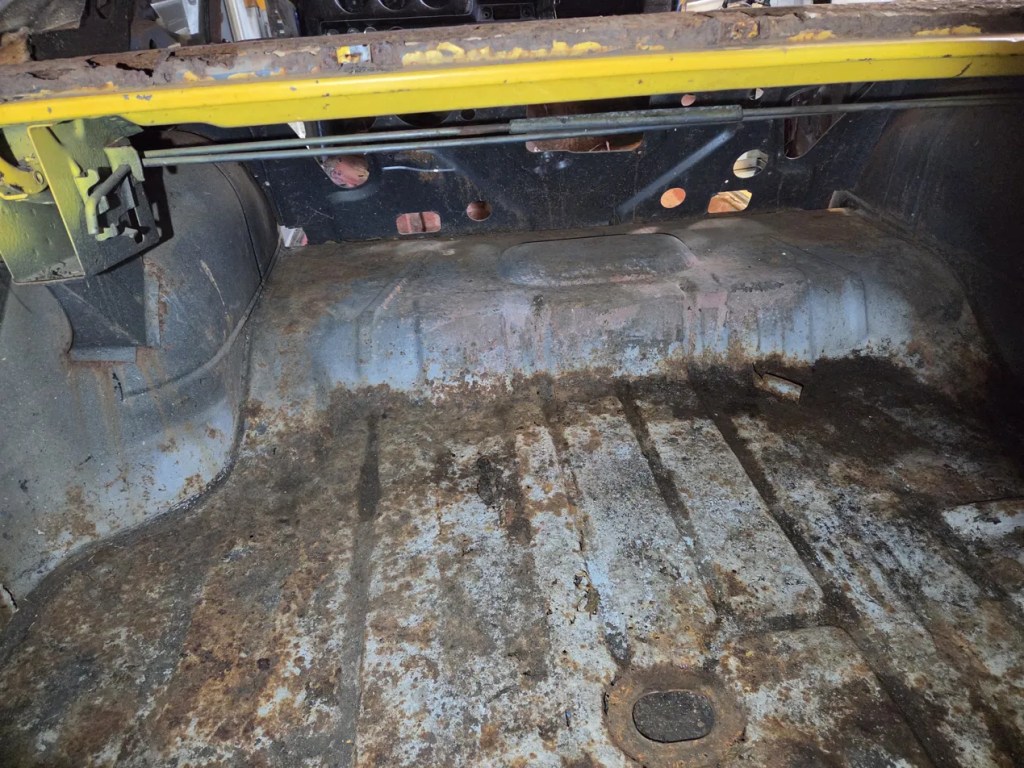
The verdict on the floors matches the plan, with a little extra honesty. The driver side is gone, no surprise, and a few holes are creeping toward the passenger side. The trunk floor actually read better than I feared: surface rust and flaking paint, but the pan ribs are intact and there is no daylight in the main floor. The junctions at the drop offs get probed hard after blast, because that is where A bodies rot from the inside out.
The tank drops
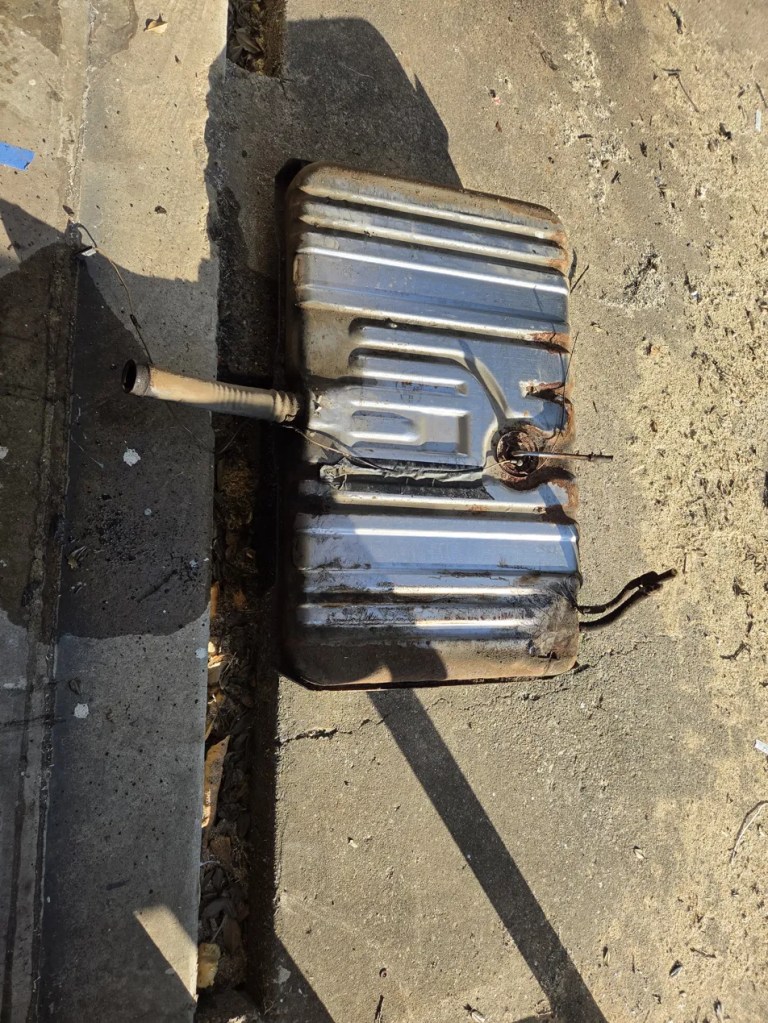
Same day, the gas tank came out. Two straps, four bolts, one floor jack with a piece of plywood, and a lot of respect for anything that once held fuel.
And here is a pleasant surprise: the tank is in good shape. The straps did their job for half a century. It is staying out of the blast booth, obviously, and it gets an internal inspection before I decide whether it cleans up and seals or gets replaced. A tank you can save is money back in the parts budget.
The tag tells a story
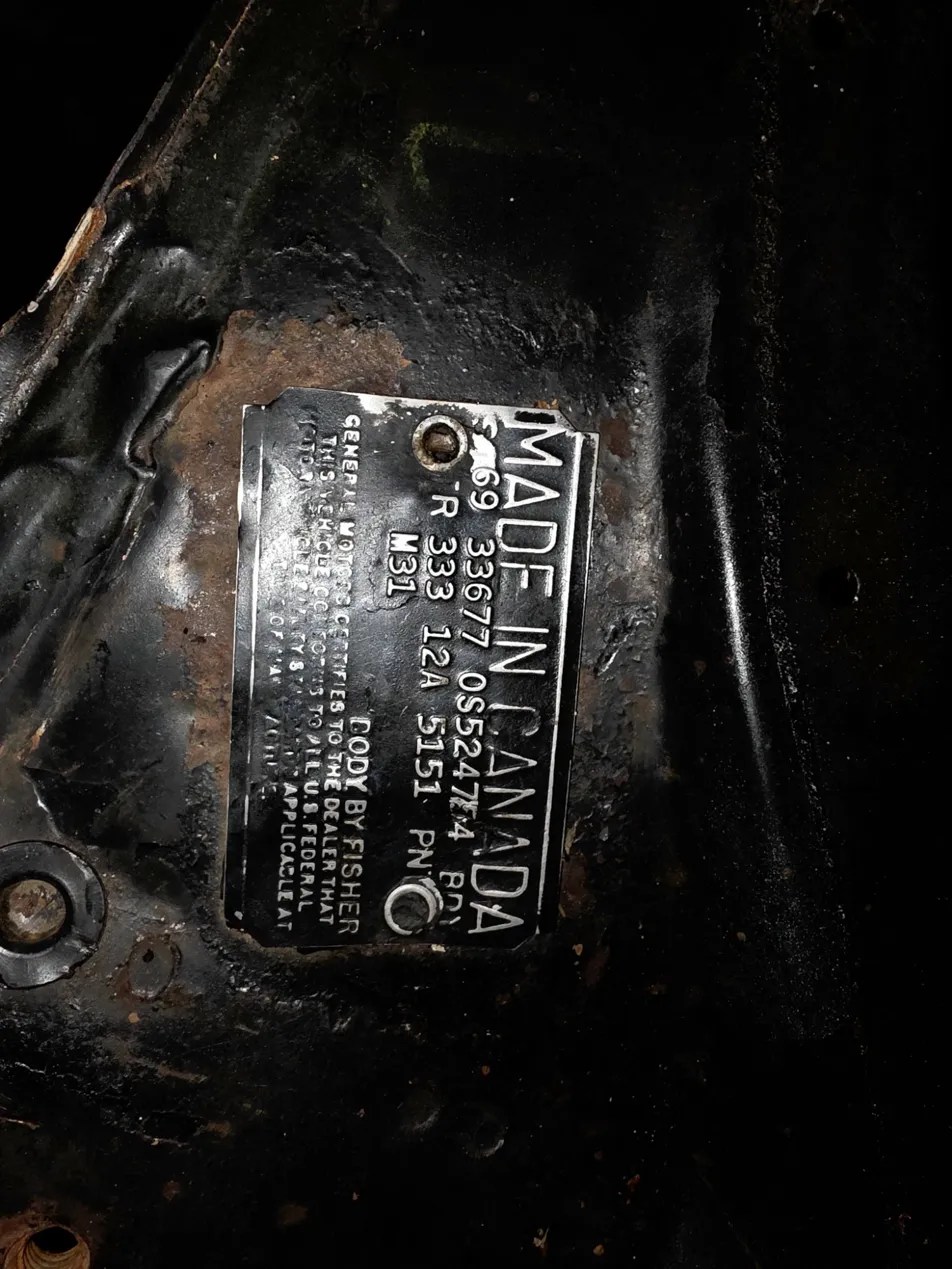
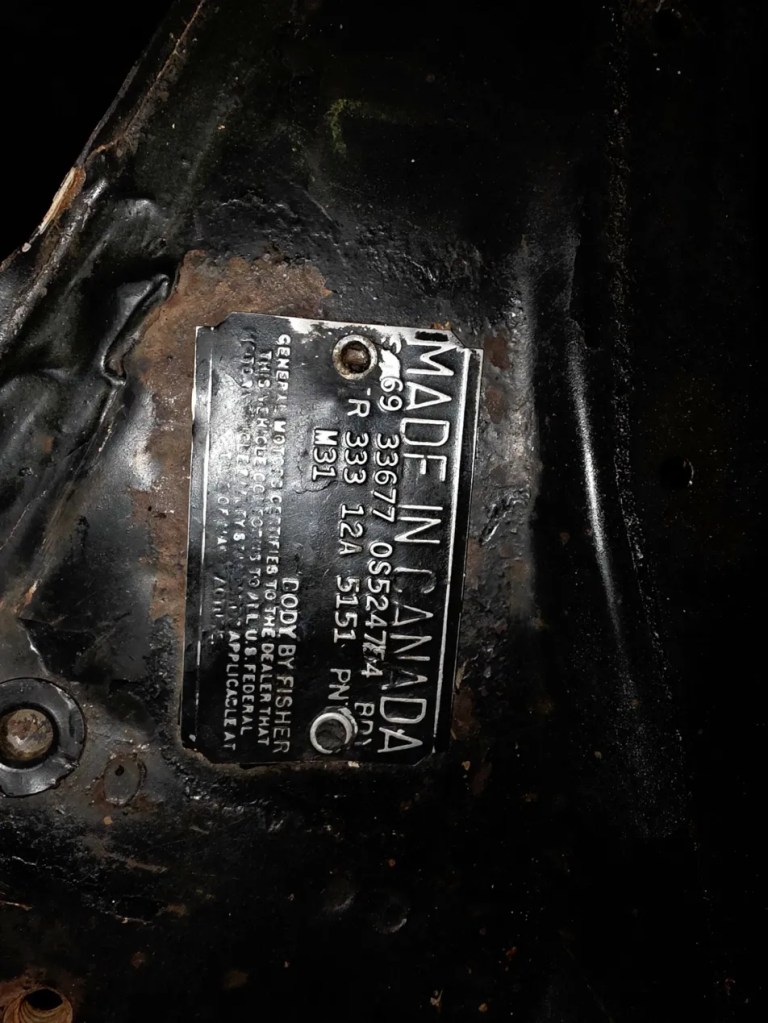
With the cowl area cleared, the Fisher body tag got its portrait taken. Body 336777, trim 0S524, built the third week of March 1969. And stamped right across the top: MADE IN CANADA.
This car came down the line in Oshawa, Ontario before it ever saw a Maryland driveway. Somewhere between then and now it somehowkept its numbers matching drivetrain, gained a family of squirrels, , lost of a few lbs of sheetmetal, and waited. Now it is on the other side of that story.
The stubborn one
Session two was unbolting day. The wiper motor came out through the cowl access, which is exactly as much fun as it sounds, and then it was body mount time. On a body on frame car like this, a handful of bolts is all that holds the shell to the chassis.
Every one of them broke loose and came out. Except one.
The passenger rear mount just spins. That means the caged nut up in the body structure broke free of its welded cage, which is a rite of passage on these cars. Rust ate the cage, the nut let go, and now the bolt turns forever and accomplishes nothing. It happens in the moisture zones, and the passenger rear corner of this car has been the wettest spot on it for decades.
The fix is not finesse. The bolt is trash, the mount is trash, all the mounts are being replaced anyway. It gets cut.
What happens next
Think about that for a second. One bolt. One cut through one seized bolt, and this body comes off the frame it has been sitting on since March of 1969.
Before that blade touches steel, everything else gets triple checked: lines, wiring, cables, grounds, and a lifting plan so the shell comes up level and controlled. A body separating from its frame for the first time in fifty seven years is a milestone. A body separating unevenly with someone underneath it is an emergency. We do the boring checklist first.
Next post, she flies.
If you have fought a spinning cage nut on one of these, tell me your war story in the comments. Everybody has one.
Let’s build it.
Anchorpoint Iron
 Anchor Point Iron - Classic Car Restorations and Customizations
Leave a comment