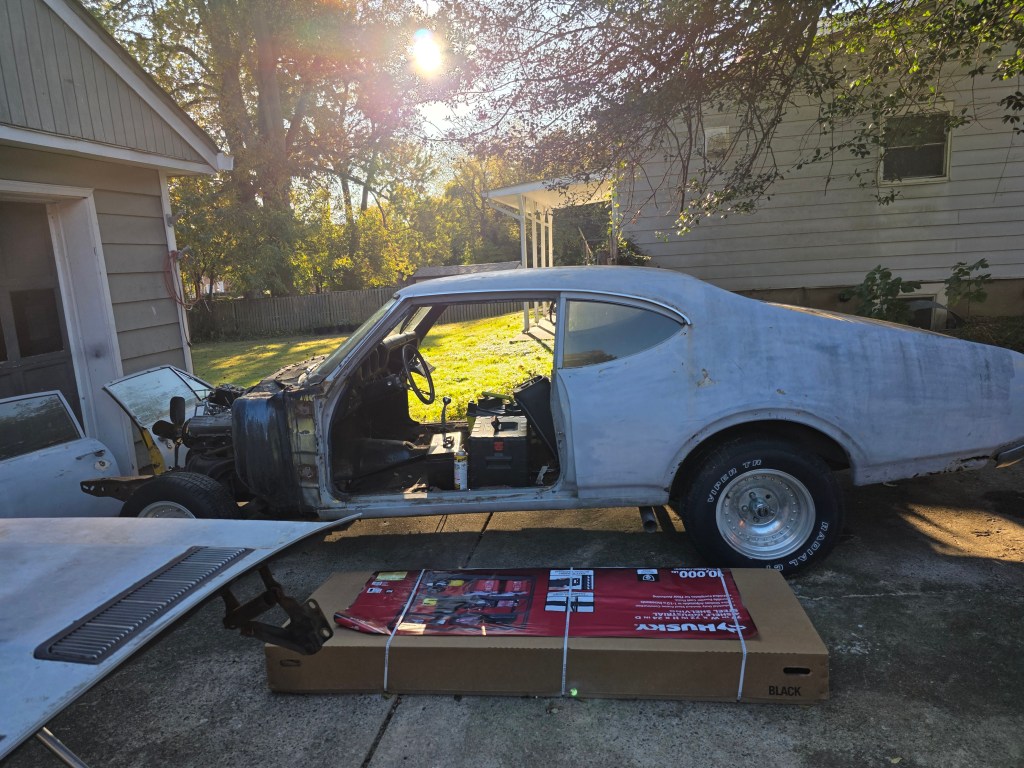
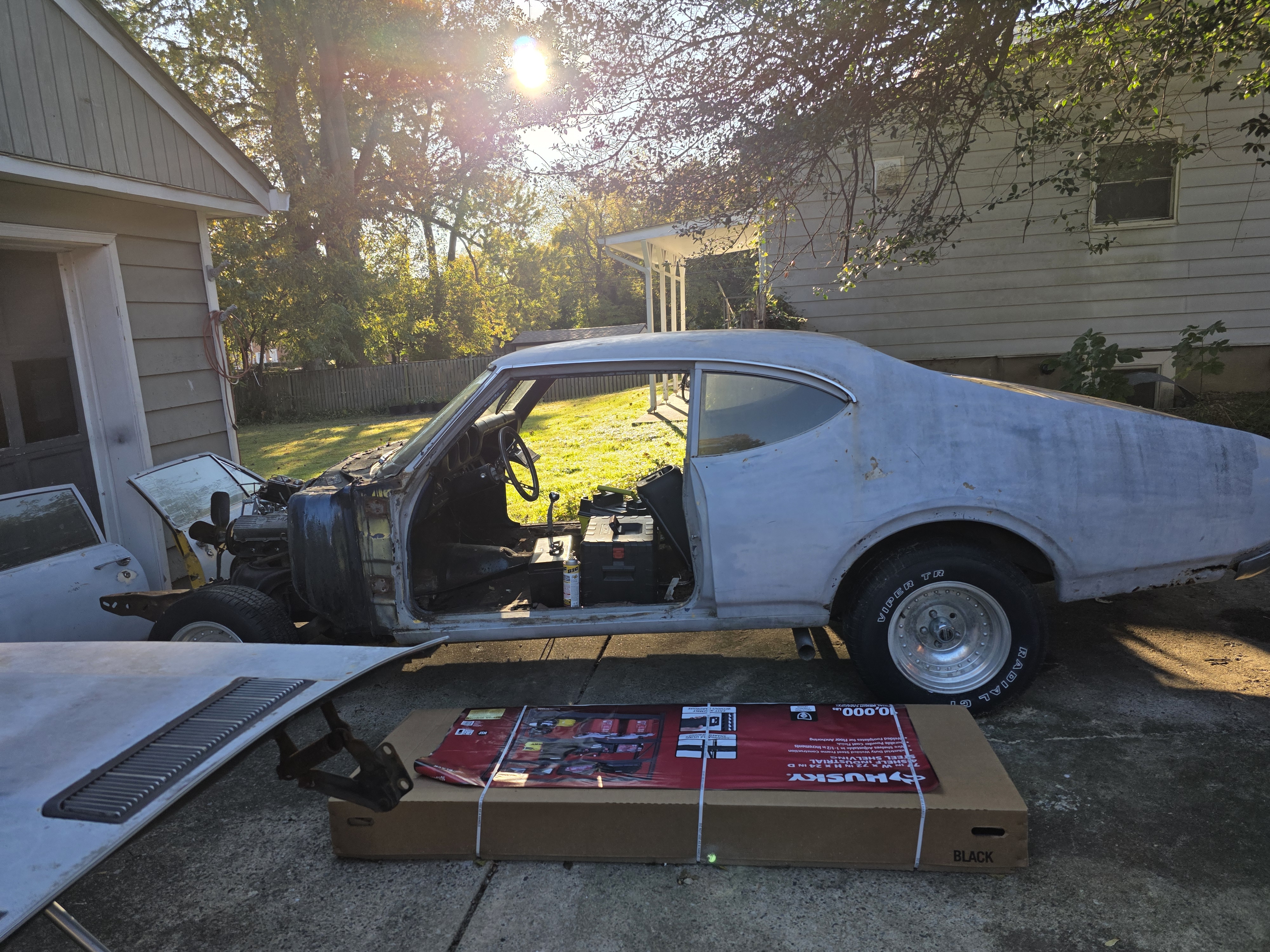
A restoration does not start with a wrench. It starts with a decision to take a whole car apart on purpose and trust yourself to put it back together better. This was that day.
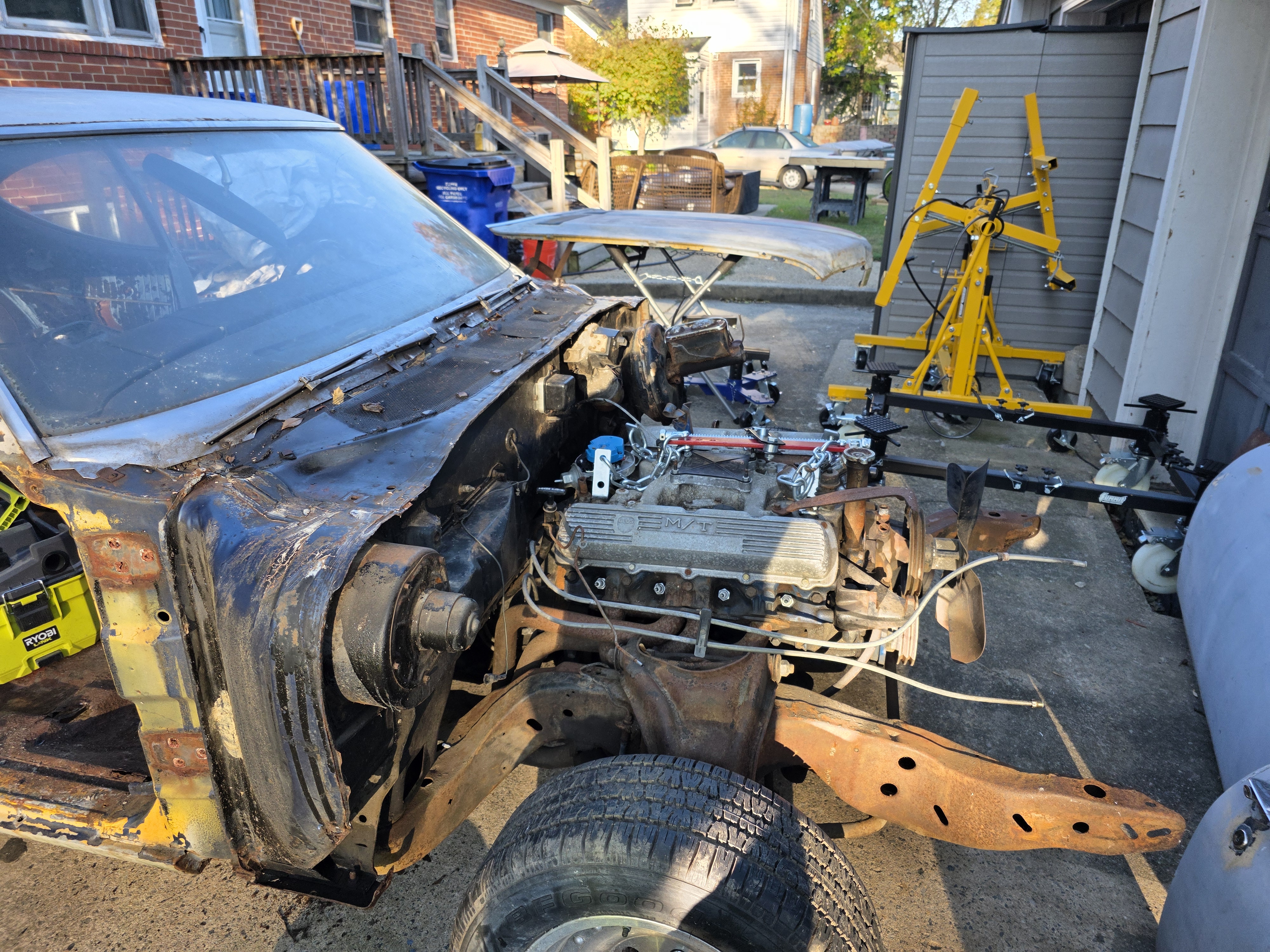
By the end of this session the Cutlass was a shell: front clip off, hood and deck lid on stands, doors pulled, glass out, interior stripped to painted steel. Fifty seven years of car came apart in a driveway, and every fastener went into a labeled bag. Boring discipline now, sanity later. Ask anyone who has stared at a coffee can full of mystery bolts three years into a project.
What the teardown revealed
Strip a car naked and it starts telling the truth. Some of it we knew. Some of it was news.
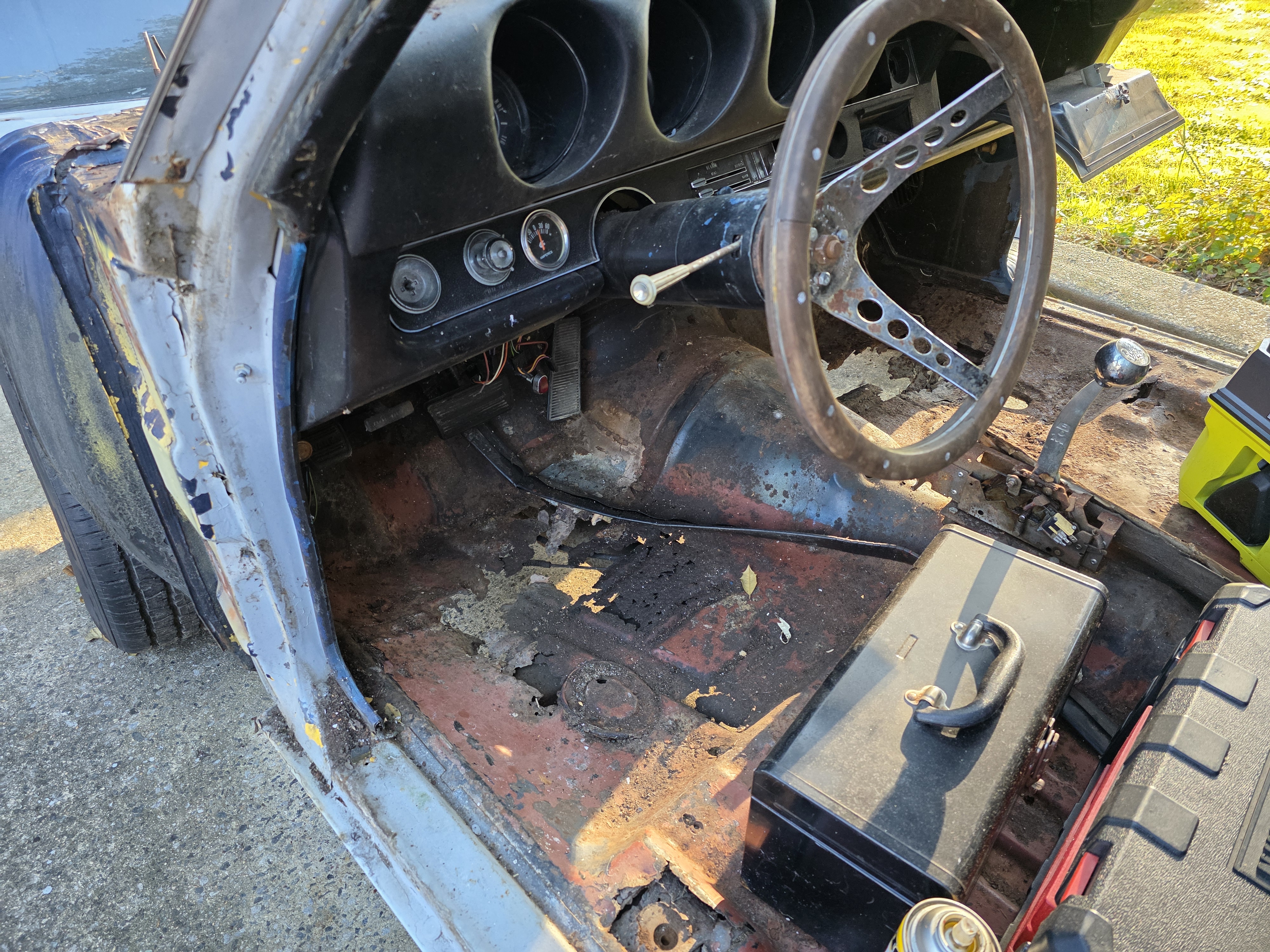
The floors are what we expected, and expected is bad. With the interior out, the driver floor pan showed its holes in full daylight. Rust through, not surface scale. That panel is getting cut out and replaced entirely, and the passenger front half is going with it. No drama here, this was in the plan, but there is a difference between knowing a floor is bad and standing there looking at the ground through it.
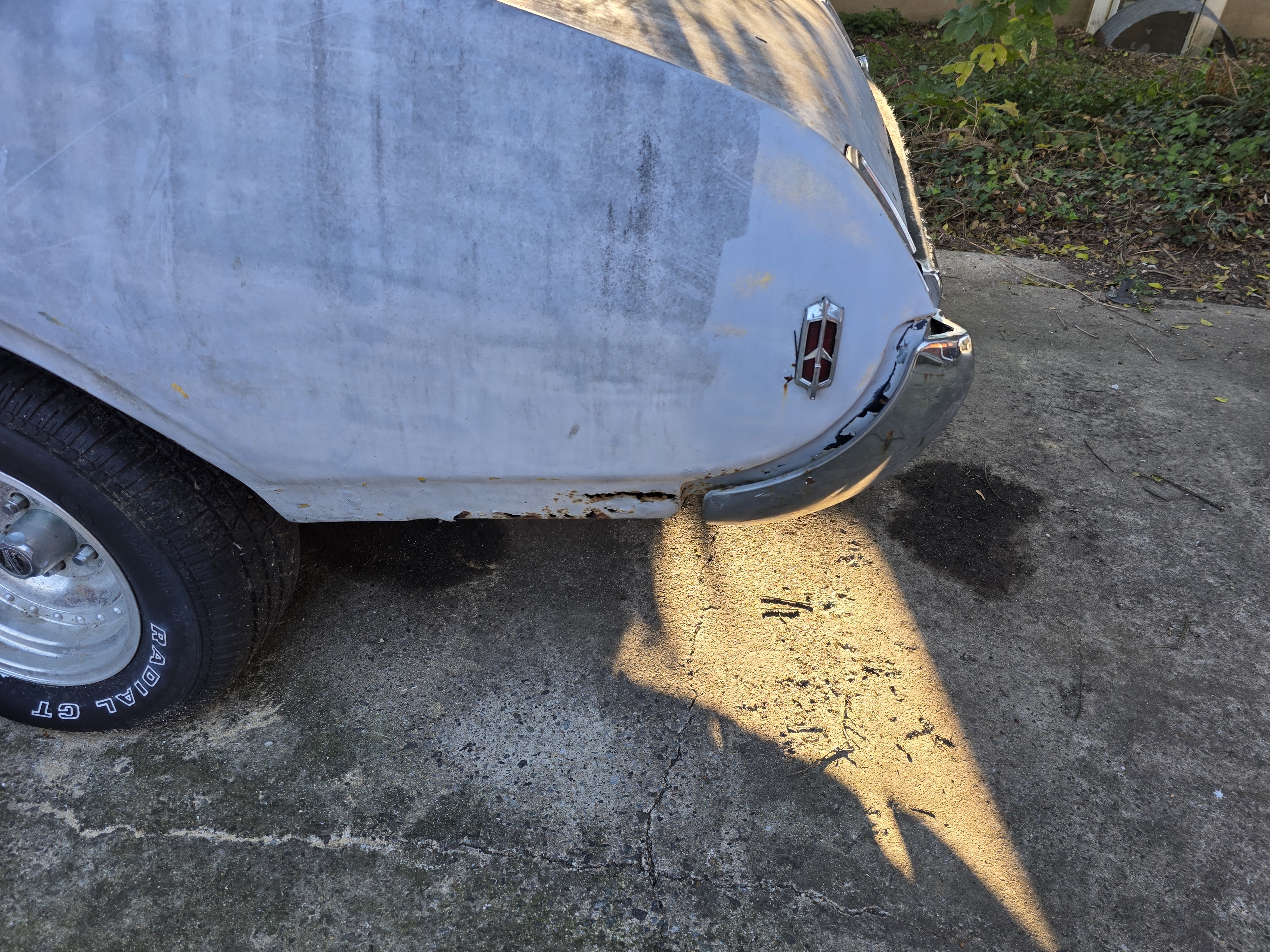
The rear quarter confirmed its spot. Driver side, right at the bumper filler where the quarter, the extension, and the rocker cap all meet. Classic A body rot point, water sits there and works from the inside out. Patch panel territory. And notice what is sitting two feet above the damage: the original Oldsmobile rocket side marker, still on the quarter. That light stays with the car. It gets cleaned and polished, not replaced. Some parts carry the soul.
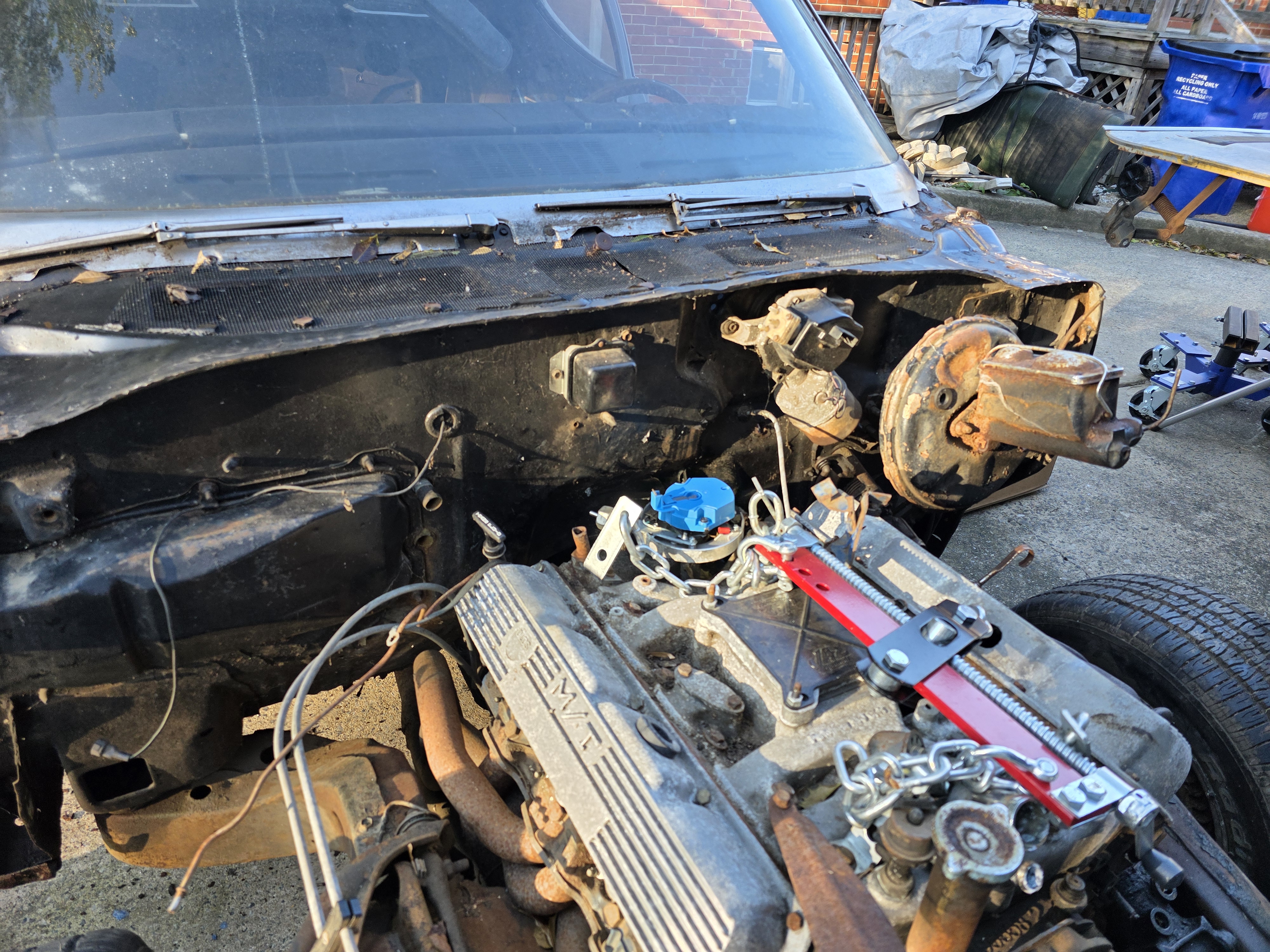
Somebody loved this car fast, once. Pop the front sheetmetal off and the Rocket 350 is wearing Mickey Thompson finned aluminum valve covers over a set of headers. That is not how it left the factory in March of 1969. Decades ago, someone was building this into something quicker, and the wood rim steering wheel with the drilled chrome spokes inside tells the same story. This car has hot rod history in its bones. We are not the first ones to see potential here, just the ones who get to finish the sentence.
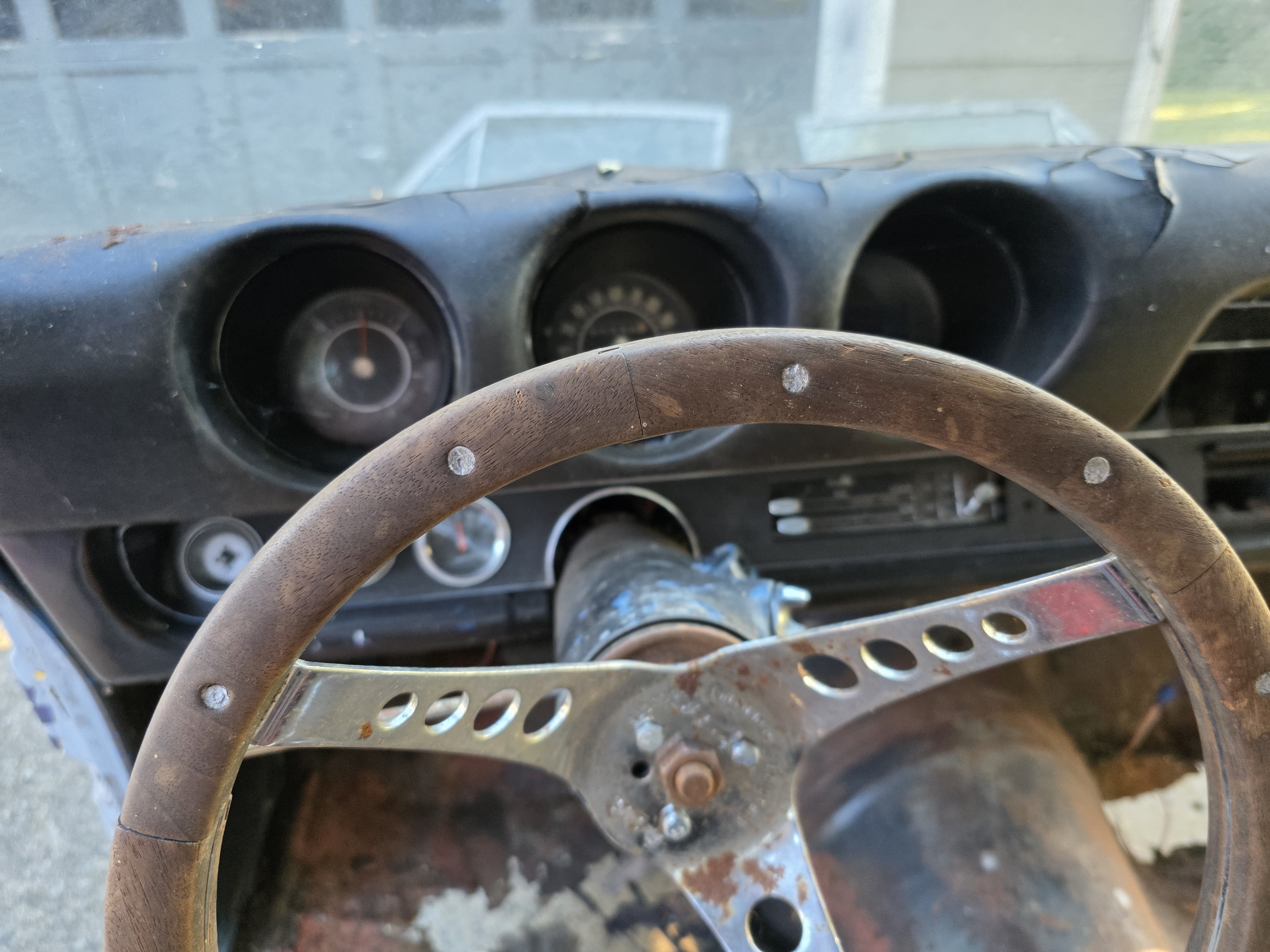
The dash is honest. Gauges present, pad cracked, everything documented before it came apart. The interior goes back black, as specified, but every original piece got photographed in place first. Once a car is in boxes, photos are the only memory that does not lie.
The engine is next
The leveler bar is bolted on and the chains are hung. Next session the 350 comes out and goes on the stand, then it is off to the machine shop to find out what is inside. An engine that sat this long gets no benefit of the doubt: bore it, deck it, new cam bearings, hot tank, magnaflux. Trust nothing you cannot measure.
Where things stand
The shell is bare and rolling on dollies. The rust list is confirmed and photographed: driver floor, passenger floor front half, passenger rear quarter at the filler, plus the cowl still to be opened up. New shelving is staged because a torn down car takes four times the space of an assembled one, a law of physics nobody warns you about.
Next stop for the shell: soda blast, down to bare metal, where the last secrets come out.
Anchorpoint Iron
 Anchor Point Iron - Classic Car Restorations and Customizations
Leave a comment